
Working together through co-creation: a year of progress in the Living Heritage Journeys project
Over the past year, the partners of the Living Heritage Journeys project have moved right into the heart of co-creation. All are working closely with different stakeholders: living heritage communities, heritage actors, tourism actors … to shape their pilot experiences. Together they search for elaborating meaningful and sustainable tourism experiences connected to the living heritage.
While each partner operates within a very different cultural ecosystem, a shared commitment to co-creation and community-centred development has defined our collective journey.
What follows is an overview of the progress, challenges and reflections across the five participating regions:
Between festivals, foodways and traditional games (AGA, Italy):
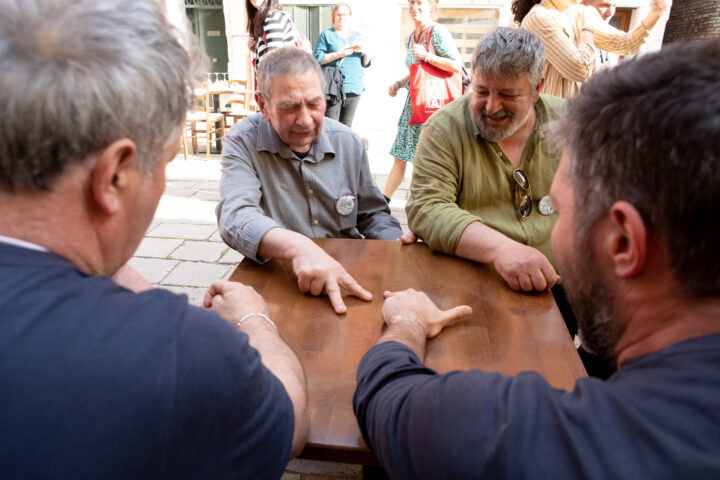
© associazione giochi antichi
For Associazione Giochi Antichi, the year has been marked by ambition, complexity and steady progress. Working with the heritage communities in Verona and in Belluno raised a challenge: most of the network members possess deep heritage knowledge but have limited experience in tourism. Guiding them towards engaging confidently with tourism stakeholders has therefore taken time, patience and continuous dialogue.
A key topic emerging from community discussions is the strong cultural link between food, handcraft and traditional games. On the one hand emphasised the heritage communities in Verona, Venice and Borgo Valbelluna how these practices naturally intersect: people gather to play, and afterwards they share traditional food in squares, streets, osterie and taverns. On the other hand, artisanal skills, essential for the practice of rowing (voga), are also fundamental for the construction of simpler game's instruments, such as the handball (To'vegna) and the lippa (S-cianco, a stick game).The idea of developing cultural itineraries combining traditional games, food heritage and handcraft is now taking shape as a promising foundation for the pilot.
Relations with tourism partners such as Ways have been constructive, even if challenging. Businesses operate on different schedules and profit-driven priorities, often conflicting with living heritage communities’ need for time and meaningful participation. The dialogue between the groups of players on the ground and the tour operator required AGA to engage in intense mediation and a significant negotiation phase, including regarding the economic benefits for the communities.
In this pilot, volunteers from the associations will act as guides for tourists, generating financial revenue to support the transmission of the living heritage they safeguard. Benefit-sharing is a main challenge for some communities, such as the voga community: the practitioners are eager to understand how tourism-generated income could support local needs, for instance, funding a new boat for the voga school. This conversation remains ongoing and will be further developed during the pilot implementation.
A further question concerns the nature of the experience itself: should all tourists physically engage in traditional games, or should the offer focus also on storytelling and interpretation, giving several possibilities to different target-groups? Stakeholders are reflecting on the feasibility of active participation versus providing non-physical, accessible alternatives for a wider audience, and a more inclusive sustainable tourism experience.
Aligning tradition, education and visitor experiences (Szopka - Krakow, Poland):
The Muzeum of Krakow has been navigating a complex landscape, balancing the annual Nativity Scene Contest, accompanying exhibitions and educational programmes with the demands of pilot development.
One of the challenges is that these activities target different audiences:
- the Museum’s core activity supports initiatives aimed at Krakow’s residents and aspiring nativity-scene makers
- whereas the pilot aims to engage international and domestic visitors who may have little prior knowledge of this tradition
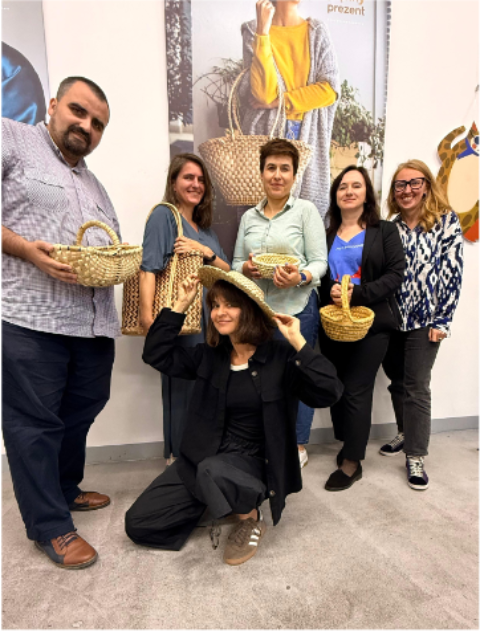
© Muzeum Krakowa
To bridge these strands, they are investing heavily in co-creation. A dedicated workshop with nativity scene makers hosted practitioners from other living heritage elements, Krakovian dance and weaving furman gloves, creating a vibrant platform for inter-community exchange, inspiration and shared learning.
In addition, a seminar on innovative approaches will be organised to popularising crafts and living heritage, co-organised with Serfenta. These initiatives aim to sharpen the pilot concept and ensure it is grounded in the aspirations of the heritage community.
Balancing tradition, gastronomy and modern expectations (Batana, Croatia):
In Croatia, the Batana Eco-Museum is both bearer and expert, which makes the co-creation process highly internal, but not less complex. The pilot combines an interpretive heritage walk centred on local foodways with a promotional campaign showcasing the cultural landscape linked to the beloved tavern that forms the heart of the eco-museum.
A dedicated meeting of the core group revealed different perspectives, particularly regarding the gastronomic offer. Some members wondered whether partnering with renowned chefs could increase visibility and attract new audiences, while others expressed concern that such collaborations might distance the eco-museum from the everyday food traditions that define its cultural integrity. Rather than a conflict, these conversations reflected a healthy and ongoing negotiation process familiar across living-heritage tourism: how to innovate in ways that are meaningful, respectful, and sustainable.
To support this process, a Heritage Experience Canvas workshop was organised with the tourism sector in November. The workshop included a guided walk along the proposed heritage route, followed by a structured session where the offer was refined, focusing on required resources, feasibility, and the most appropriate communication channels. This helped align expectations and strengthen the shared vision for the final experience.
Through continued dialogue, the group agreed on several concrete directions:
- developing interpretation tours that connect key heritage spots;
- improving kitchen operations to ensure consistently high-quality service;
- collaborating with the global Slow Food movement to enhance skills and capacity;
- and preparing a promotional campaign rooted in the values of the eco-museum.
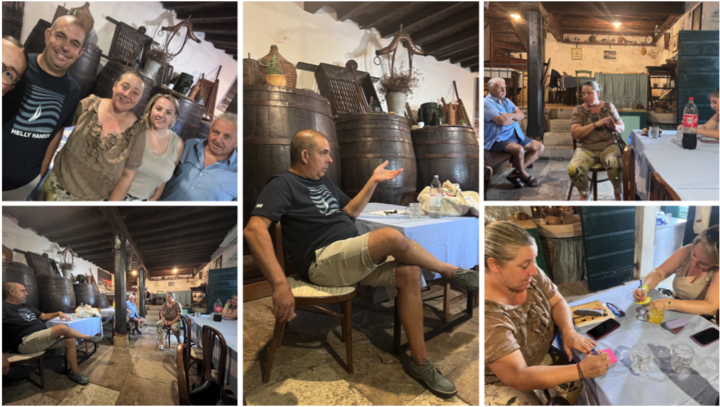
© Ecomuseum Batana
Creating the Carillon Culture Experience Box (Belgium)
Thomas More and Workshop intangible heritage have made strong progress in developing the participatory pilot with the carillon heritage and tourism networks. After initial strategy workshops before the summer, the core group worked collaboratively to shape a shared vision. Input from the feedback group helped fine-tune the objectives before brainstorming possible pilot formats.
When brainstorming three ideas emerged:
- a canvas or box offering a heritage experience,
- a sing-along event,
- and different forms of local merchandise.
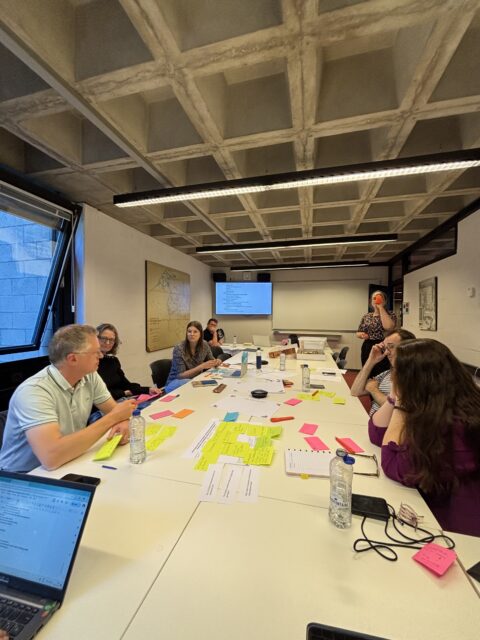
© Workshop intangible heritage
Through continued refinement during successive workshops, the group unanimously selected the Experience Box. Recent discussions have outlined its key characteristics: it must integrate sound, be tactile and visually attractive, and allow meaningful interaction both indoors and outdoors.
One of the biggest challenges has been managing expectations around budgets within a co-creative framework. Business-oriented stakeholders sometimes expect early clarity on outcomes and costs, yet the very essence of co-creation is uncertainty. The core group is navigating this by treating the box as a minimal viable product that can later attract investment from interested tourism or heritage actors.
Legendary places and new technologies (Sagobygden, Sweden):
Sagobygden has focused on strengthening the connections between legendary sites, storytelling traditions, and visitor development across three municipalities. An important goal is to build stronger local networks and highlight the benefits of including legendary sites in regional destination development.
Through workshops with members, staff, and the company developing the app, the team has identified three legendary sites, one in each municipality. The work has also involved engaging nearby visitor businesses and destination managers to explore shared benefits, ranging from coordinated programmes and activities to co-branded materials and communication.
One of the key initiatives is the further development of the existing storytelling app with new AR features, audio guides, and interactive quizzes. The narrative theme is based on legends about “strong women”, brought to life through GPS-triggered soundscapes and augmented reality. The scripts, inspired by historical periods dating back as far as the 11th century, will be available in three languages: Swedish, English, and German. Through green screen recordings, visitors will encounter historical characters at the legendary sites via the app’s digital world. This makes the locations more accessible and engaging for all ages. Currently, the sites only have an information display and a QR code linking to an audio version of the story, which makes this digital development an important step forward.
© Sagobygden
Shared reflections across the partnership
Across all partners, several cross-cutting themes have emerged:
1. Co-creation happens in small groups
Three of the five project partners work primarily with small, core groups of stakeholders, which helps maintain focus, deepen discussions and ensure feasibility while still reaching out to broader audiences at key moments.
2. Tourism actors are highly diverse
Project partners work with a spectrum of tourism stakeholders, public tourism boards, private guides, universities, and commercial companies, each with distinct priorities, timelines and expectations.
3. Benefit-sharing and sustainability are ongoing challenges
Heritage communities seek clarity on how tourism will support cultural continuity, while tourism actors often operate within tight commercial parameters. Aligning these realities requires time, negotiation and mutual understanding.
4. Co-creation takes longer, but results are richer
Every project partner has found that deep community engagement naturally extends timelines. Yet it also surfaces more meaningful insights, grounded in community values and their realities.
Looking ahead
As we approach the next project year, project partners are steadily moving from strategy alignment and co-creation into the testing phase of the pilots. Despite diverse contexts, one shared commitment unites all the efforts: we keep heritage communities at the heart of tourism experiences that respect, celebrate and sustain their living heritage.
The past year has been one of reflection, experimentation and significant groundwork. The months ahead promise to translate this foundation into concrete pilots, each shaped both by the efforts and expertise from the partners in the heritage and tourism sectors, but also -and crucially- by the voices and visions of the heritage communities themselves.