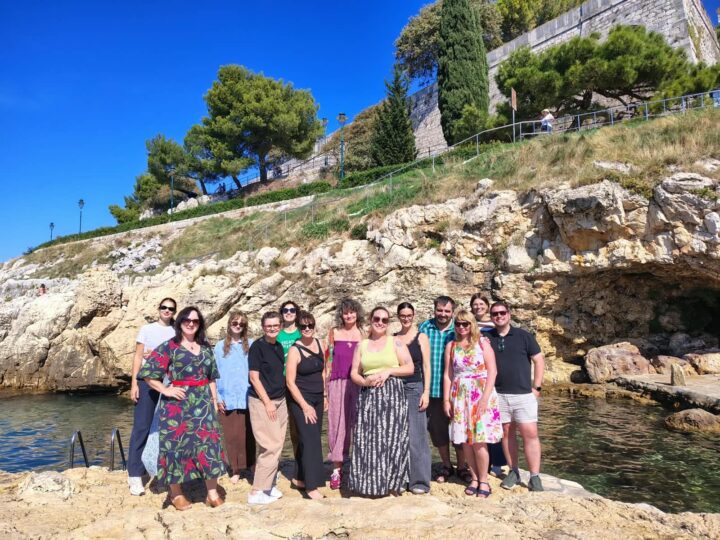
Uniting sea, song, and shared traditions in Rovinj! - From community practices to practical tools for heritage tourism
© Island Media
Highlights of the 4th Living Heritage Journeys Transnational Meeting in Rovinj
The 4th Transnational Meeting of Living Heritage Journeys, hosted by the House of Batana in the coastal town of Rovinj, Croatia, brought the consortium partners back together. Marking a pivotal stage in the project, this gathering focused on evaluating ongoing pilot activities across Europe and translating these real-world implementation experiences into our upcoming Living Heritage Toolbox.
As our annual face-to-face gathering, the meeting offered an invaluable opportunity for discussions, peer evaluation and local engagement. Throughout three intensive days, partners reconnected with the core mission of the project exploring how living heritage can be safeguarded and integrated into sustainable tourism in ways that keep the practitioners and the community at the centre.
Three days of knowledge sharing, in-depth discussions … and Istrian cultural experiences
Day 1
Consortium partners arrived in Rovinj from across Belgium, Croatia, Italy, Poland, and Sweden, eager to begin a focused series of working sessions. The first day was dedicated to the project process and reviewing implementation progress, evaluation requirements, and reporting frameworks. Crucially, the consortium began actively translating lessons learned from their field experience into the toolbox. Partners agreed that the toolbox must remain highly practical and user-friendly - focusing on recurring core lessons, simple language, and actionable recommendations rather than an exhaustive academic catalogue.
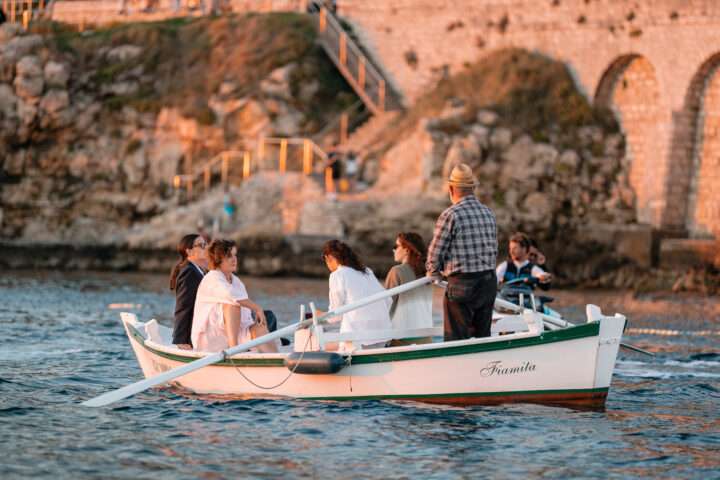
After a first day of discussion and exchange, we were welcomed by local practitioners aboard traditional batana wooden fishing boats. Exploring Rovinj from the water, we discovered the town’s maritime landscape through the eyes and hands of the fishermen who keep this living heritage alive.
© Island Media
Day 2
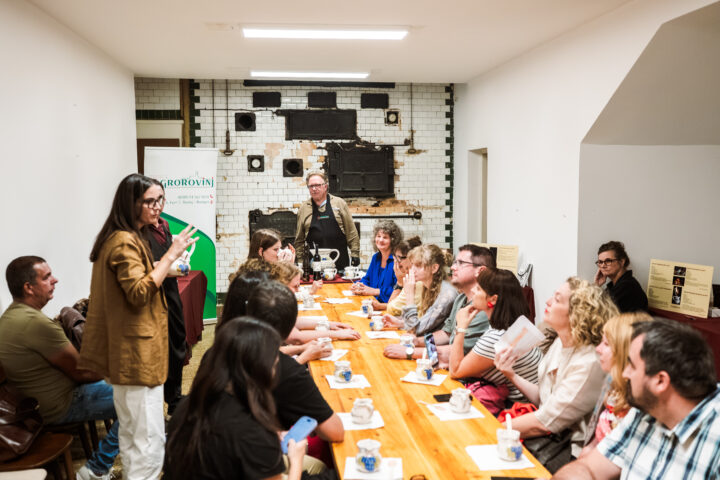
The second day shifted focus to a capacity-building workshop on heritage interpretation, where Interpret Europe came and took the consortium along in their framework. The sessions explored how to move beyond transmitting factual data towards creating personal meaning, sensory connection, and stewardship among visitors.
The afternoon focused specifically on food heritage and gastronomy interpretation. Discussions highlighted that culinary heritage extends far beyond a recipe or a plate: it encompasses identity, production practices, landscape, and social traditions. Through various European case studies, participants examined how tourism experiences can be designed with local communities rather than just for them. In addition, we participated at the book presentation Truffles, Prosciutto, Supa: A Recent History of Istrian Gastronomy, by Dr Tanja Kocković Zaborski and published by the Ethnographic Museum in Zagreb, which explores how these three ingredients became key symbols and brands of Istrian cuisine and its tourism.
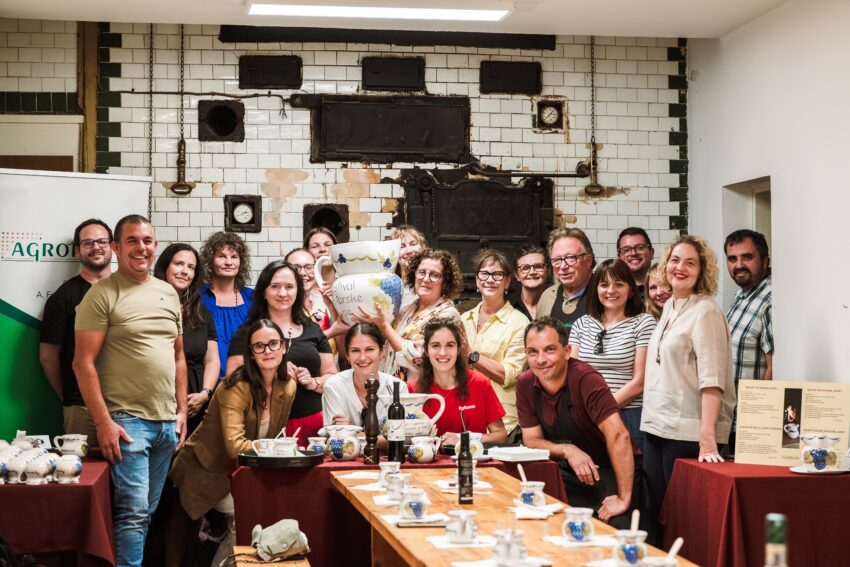
In the evening, we experienced this firsthand. We met local practitioners, members of the Rovinj farmers’ association who prepared traditional supa for us, explaining the preparation methods, ingredients (were you can get creative), and traditions surrounding the dish. Afterwards, we gathered at the spàcio for dinner, surrounded by the uplifting atmosphere of traditional fishermen’s songs playing in the background.
© Island Media
Day 3
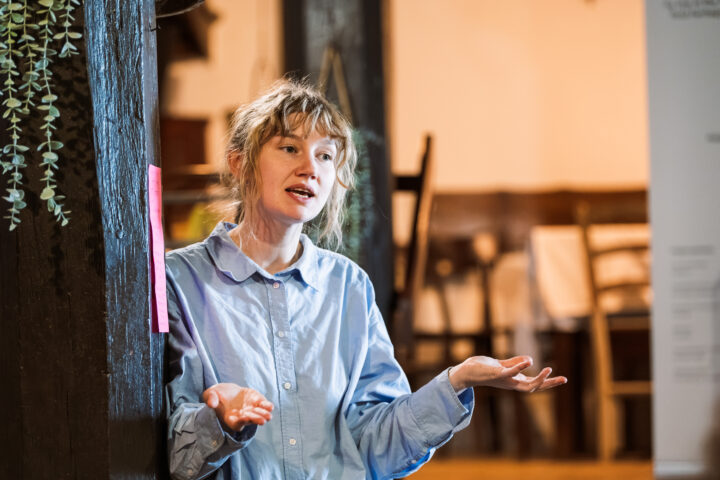
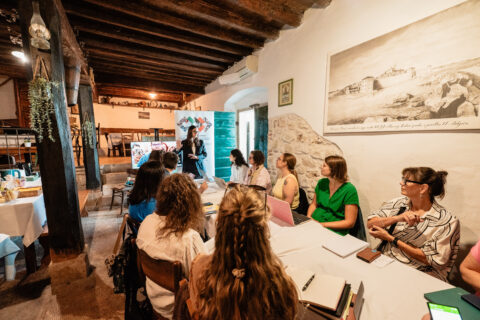
On the final day, partners rolled up their sleeves for a practical workshop dedicated to the toolbox structure. Drawing on the insights gathered over the previous days, the consortium mapped out core themes, user journeys, principles, and practical tools to ensure the final outputs effectively serve heritage communities, heritage stakeholders, and tourism stakeholders alike.
© Island Media
Reflections on the meeting
As we look towards the next phase of the project, several core takeaways emerged from our discussions in Rovinj that will shape the development of our upcoming toolbox and future guidance:
Tailoring guidance to diverse destination contexts: The meeting highlighted the distinct operational realities across different destination types. Pilots in smaller or rural contexts often benefit from high community enthusiasm and shorter decision-making chains. In contrast, mature urban destinations must navigate complex rules, public space regulations, and overtourism pressures. The toolbox will therefore offer modular, adaptable guidance tailored to varying governance structures rather than imposing a rigid, one-size-fits-all framework.
© Island Media
Grounding the toolbox in practical usability: Translating complex pilot experiences into actionable guidance requires a clear, user-friendly approach. Rather than producing an exhaustive academic catalogue, the toolbox will prioritise core, recurring lessons linked to concrete tools, prompts, and case studies. By adopting simple, accessible language, the toolbox will attempt to help the different stakeholders to bridge the gap between policy principles and everyday practice.
Embedding fair benefit-sharing and ethical safeguards: Discussions strongly reaffirmed the ethical dimension of heritage tourism. Visibility or "exposure" alone is not a sufficient benefit for local practitioners. For living heritage tourism to be truly sustainable, practitioner time must be treated as real work and properly compensated, their availability must be respected, and informal groups need accessible operational structures to retain genuine control over their traditions.
© Island Media
Balancing digital technology with human connection: A final critical insight concerned the thoughtful use of technology. While digital tools like apps and AR can enhance accessibility, cross-pilot evaluations demonstrated that over-reliance on screens can distract visitors from the immediate sense of place. Moving forward, the project emphasises that technology should facilitate and enrich direct encounters with practitioners, rather than replacing the human connection at the heart of living heritage.
The three days in Rovinj provided both strategic clarity for our project deliverables and a profound connection to Istria’s vibrant living heritage. The consortium returned home inspired and equipped with rich material for the next phase of Living Heritage Journeys.
A heartfelt thank you to the House of Batana for their extraordinary Croatian hospitality, flawless organisation, and for sharing their remarkable living traditions with us!